





Peterman and Gallant are a seamless fit, on and off the ice
February 2, 2026
Jolene Latimer
By Jolene Latimer
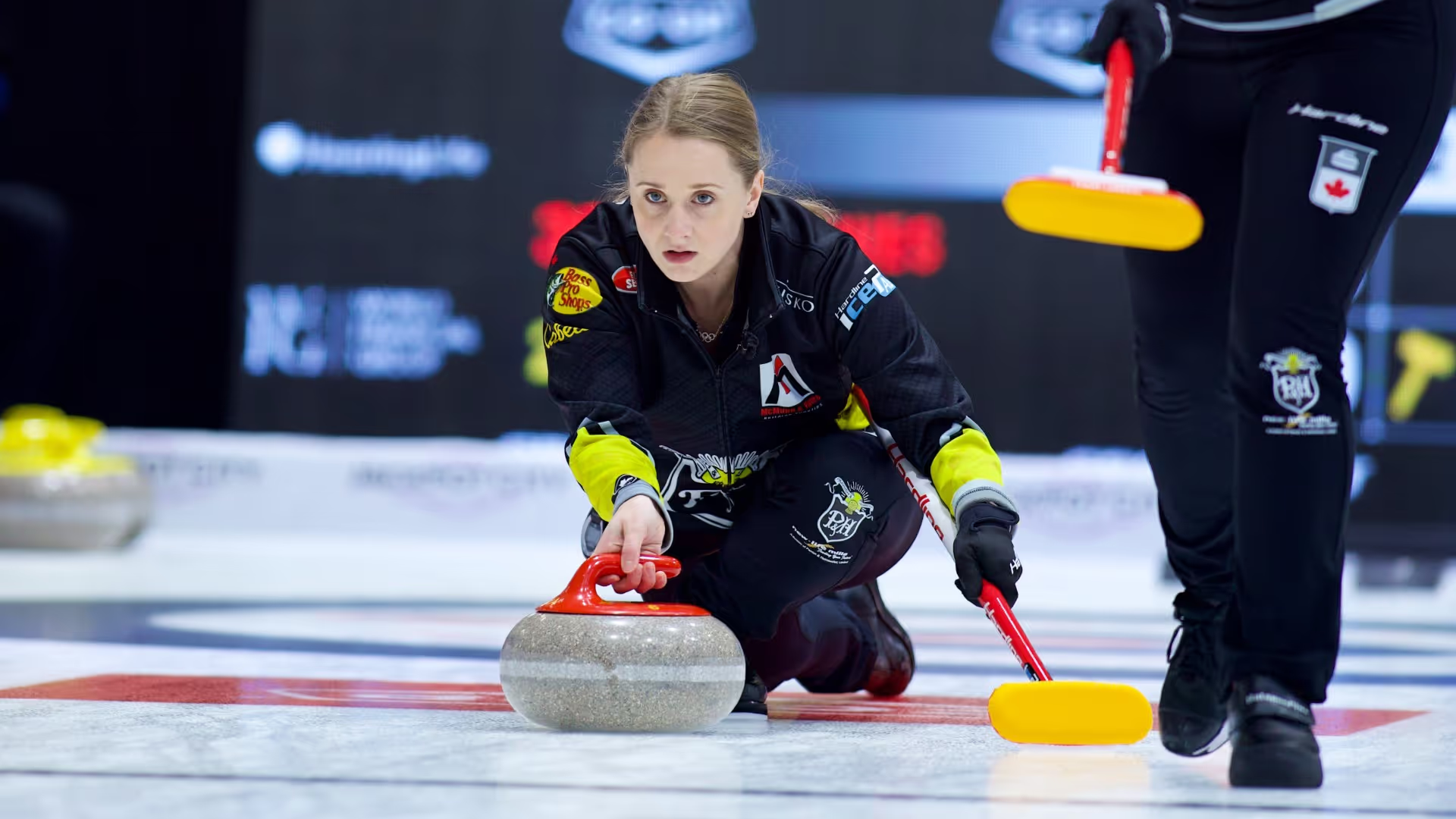
For Brett Gallant and Jocelyn Peterman, the line between partnership and relationship has never been especially clear.
They began curling together around the same time they fell for each other, and over the years, the two tracks have stayed tightly aligned. Mixed doubles, travel schedules, family logistics — all of it developed side by side.
Now, as they prepare to compete together at the Olympic Winter Games Milano Cortina 2026, it’s hard for either of them to talk about one without the other.
“It’s really been a goal of ours to compete together at the Olympics since day one of curling together,” Gallant said. “That’s kind of when our relationship as a couple began, as well as when we started competing together.”
Mixed doubles was added to the Olympic program ahead of PyeongChang 2018, and Gallant saw an opportunity. He thought Peterman would be a good fit to curl with him, plus he might have had a crush brewing at the same time. He approached her about becoming a team on the ice. They started playing, and the results came quickly.
“Then a relationship came,” Gallant said.
Neither of them tries to pinpoint a first date. There wasn’t a clean start or a defining moment. It unfolded gradually, somewhere between curling events, meals grabbed on the road and time spent in the same competitive spaces.
“We don’t even really know when our first date was,” Gallant said. “It might have been a curling event, it might have been a lunch or a coffee. It just kind of evolved.”
Ten years later, they’re married with a son, Luke, and heading to the Olympic Winter Games to represent Canada together.
Peterman and Gallant are deliberate about what stays at the rink and what comes home. Curling doesn’t dominate their evenings. Wins and losses don’t linger at the dinner table.
“People are shocked when I say we don’t really talk curling around the house or at the dinner table,” Peterman said. “We’re really good at parking it and being in the moment, and just being with our son.”
That separation didn’t happen by accident. It came from conversations early on about what competing together would actually look like in practice.
“When we formed a team, we started talking more about that,” Gallant said. “It was just kind of a seamless fit for us, both on and off the ice.”
Part of that fit comes from understanding how differently they process competition.
“Brett is very good at parking a win or a loss and being very present,” Peterman said.
That presence matters most away from the rink, when the focus shifts to family life. It’s also what has allowed the arrangement to last.
“That’s why it’s sustainable,” Peterman said. “It’s not all-consuming.”
Support, in their relationship, isn’t loud or performative. It shows up in small, practical ways — and in admiration for what the other person does beyond their own results. Gallant points to Peterman’s work off the ice, particularly her role in starting a curling program at the University of Calgary after the last Winter Olympics.
“That program didn’t exist four years ago if it wasn’t for Jocelyn,” he said. “People like her — people who want to grow the sport — that’s what’s going to keep curling going,” Gallant said.
Their ability to keep competing together also depends on a broader support system. With both of them on tour at the same time, childcare becomes the limiting factor.
“Our parents have supported us with Luke since the day he was born,” Peterman said. “That’s really the only way we’ve been able to continue to compete in mixed doubles, since we’re both away at the same time.”
There’s no uncertainty in her voice when she talks about it. The arrangement is essential.
“We have full confidence he’s well taken care of,” she said. “And that allows us to do what we do.”
The Winter Olympics introduce another layer of logistics. Housing. Schedules. The oddity of being together and apart at the same time.
“To earn that right to go to the Olympics together — that was a major goal of ours,” Gallant said. “That’s something we’ve been working toward for nine or 10 years.”
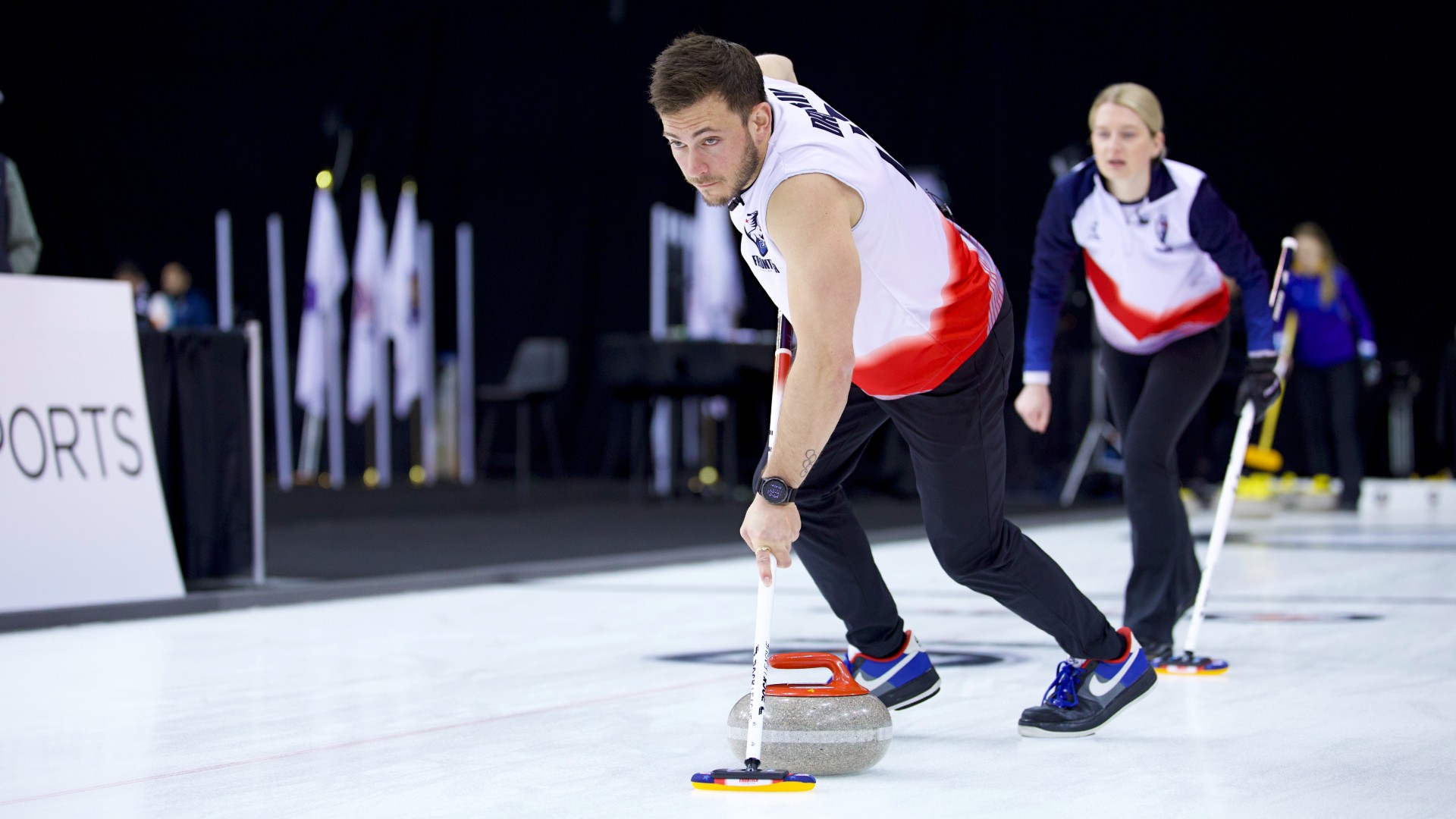
Mixed doubles, by design, leaves little room for error. Games move quickly, and roles are compressed. Communication has to be clean, especially under Olympic pressure. Gallant and Peterman are realistic about what that demands. There’s no room to hide behind momentum or to let a bad end linger.
“You don’t get much time to recover,” Gallant said. “You have to reset fast and move on to the next shot.”
They believe their familiarity is an advantage. They don’t need extended discussions mid-game, and they don’t need to recalibrate how they speak to each other when things tighten. That closeness, built over years of shared competition, allows them to stay efficient when the format forces decisions quickly.
“We know what works for us,” she said. “At that point, it’s about committing to it.”
For Gallant, the goal isn’t to reinvent anything once they arrive; it’s to rely on the habits that got them there in the first place.
“You can’t treat it like something completely different,” he said. “You have to play the game you know how to play.”
Even though they’re medal contenders, the significance of representing Canada together is bigger than the podium. It’s rooted in accumulation — years spent navigating change together.
“As a couple, and in a relationship, becoming parents together — it’s special to think about how much we’ve been through together,” she said. “We’ve supported each other through life changes and a lot of things.”
That shared history is what shows up on the ice now.
“To have that background, that amount of love and support,” Peterman said, “it’s special.”
Gallant doesn’t complicate it.
“It’s an unbelievable feeling,” he said.
.png)