Eight Ends: The lowdown on Rock League’s format and rules
April 2, 2026
Jonathan Brazeau
We’re less than a week away from the start of Rock League, with the inaugural season of the professional curling league running April 6-12 at TMU Mattamy Athletic Centre in Toronto.
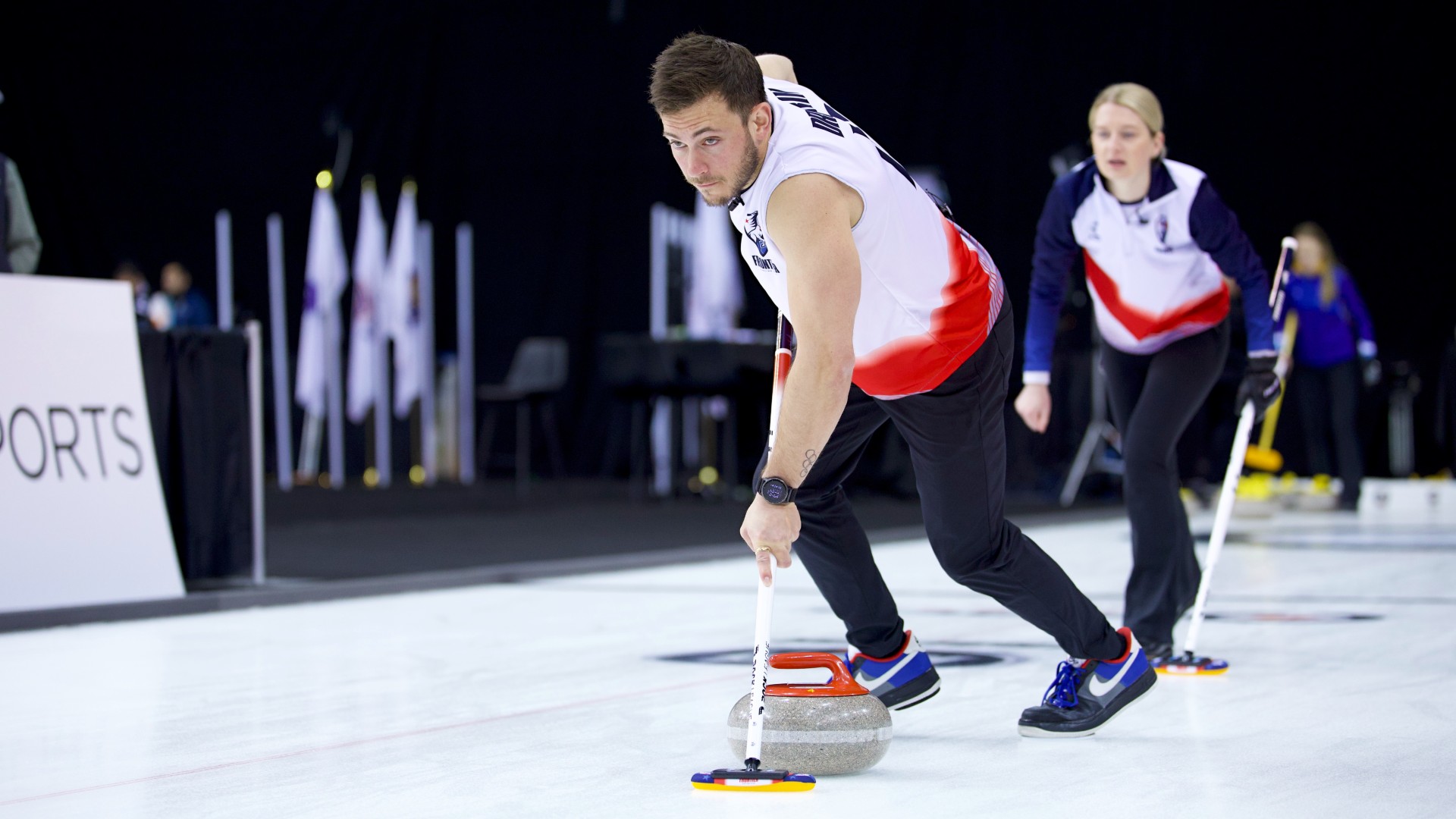
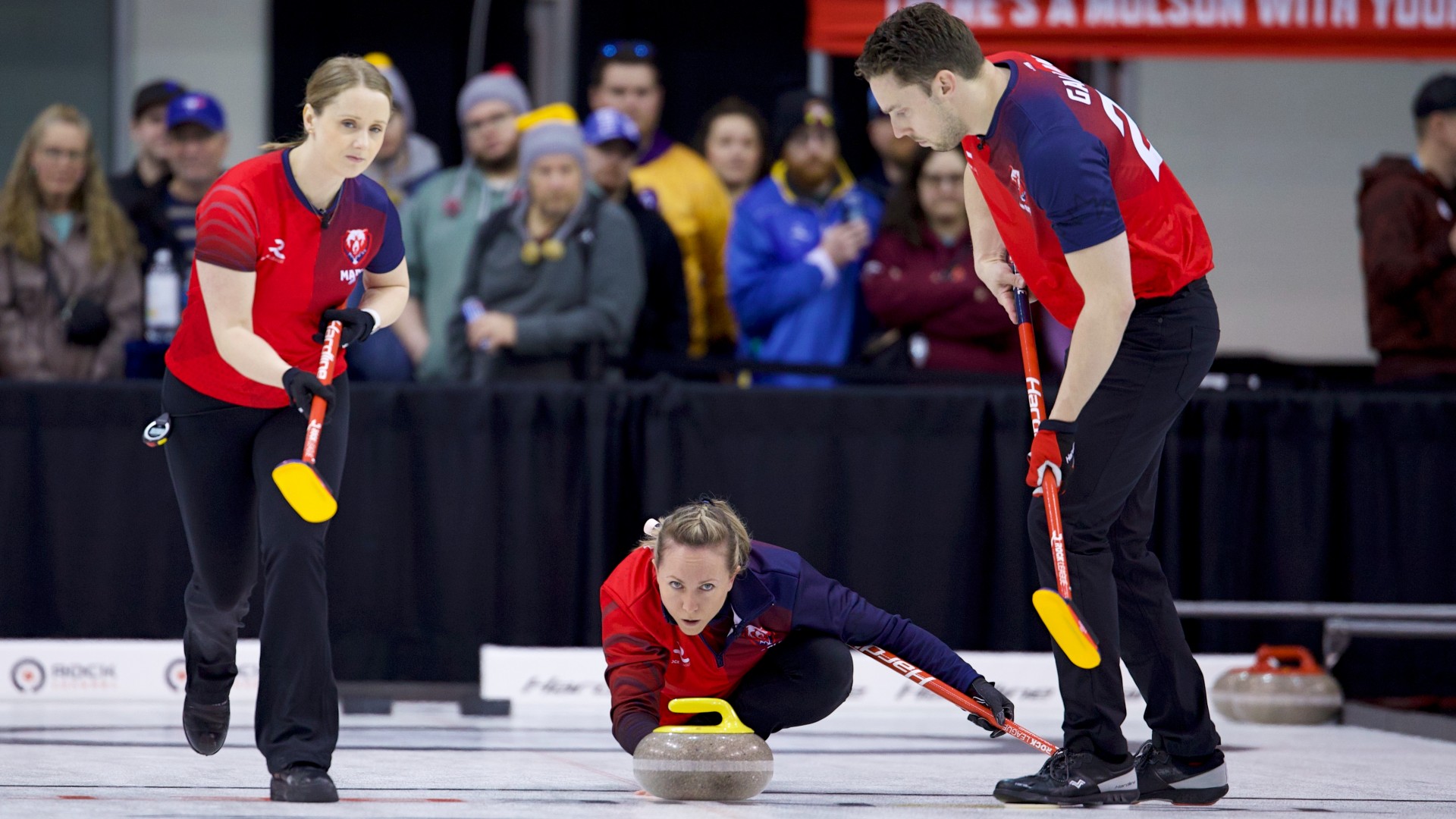
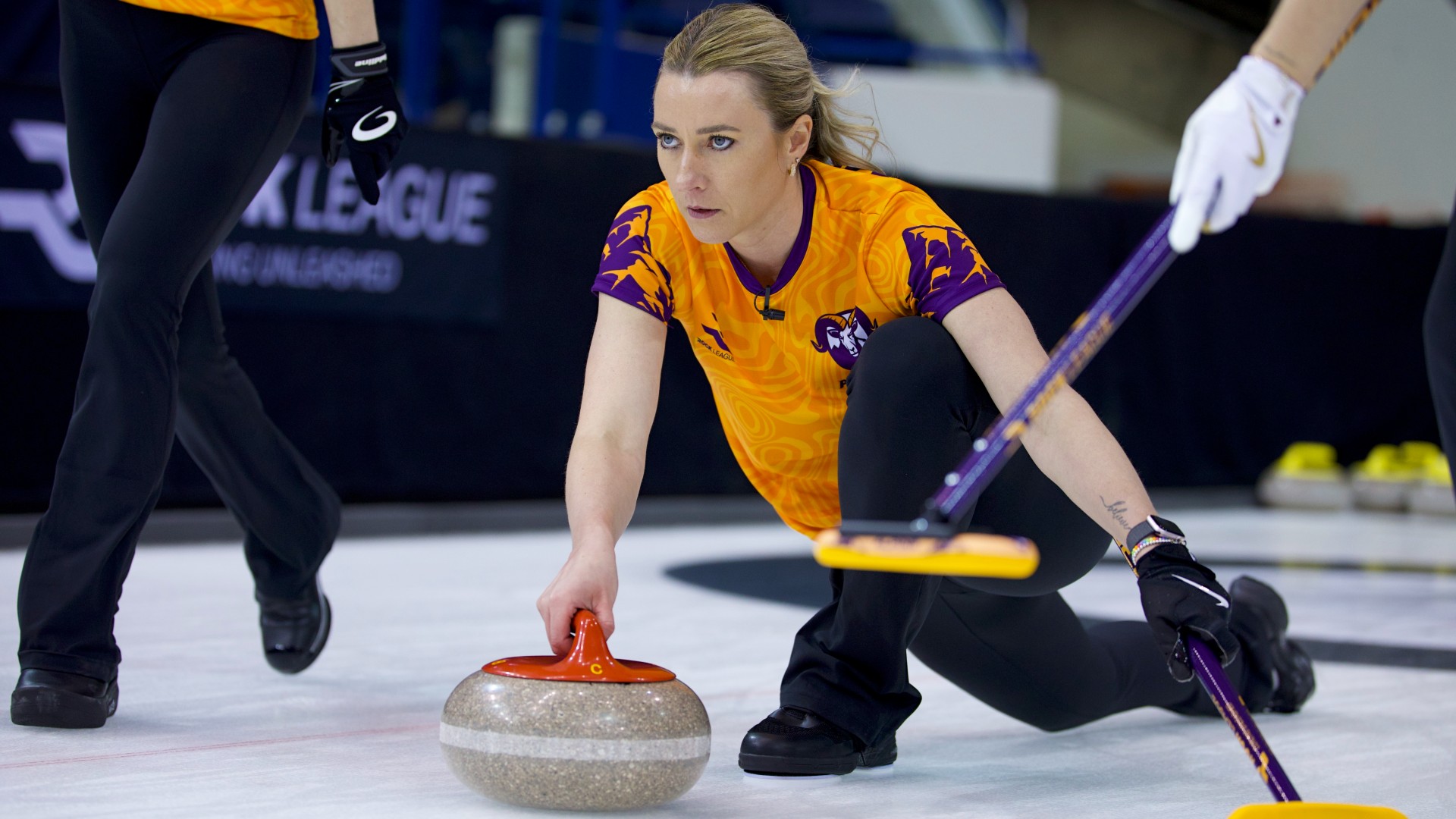
Six mixed-gender franchises — Alpine Curling Club, Frontier Curling Club, Maple United, Northern United, Shield Curling Club, and Typhoon Curling Club — featuring 60 of the world’s best curlers will hit the ice.
Brent Laing and Craig Savill were world champions together on the ice and have reunited to oversee the enforcement of the rules in Rock League. Let’s call them play co-ordinators, as Laing prefers, rather than on-ice officials.
Laing appeared on a recent episode of the Broom Brothers podcast with John Cullen to go over Rock League's format and the rules. The Curling Group co-founder and CEO Nic Sulsky also joined the show to discuss his company’s newest venture.
Here’s the lowdown on what you need to know in Eight Ends.
FIRST END: The first five days of competition, April 6-10, will consist of a full round robin. Each franchise plays one match per day, with all franchises facing each other once over the course of the five days.
With three sheets on the ice, each match will consist of three games between two franchises in men’s fours, women’s fours, and mixed doubles. The franchise that wins two of the three games will earn a point in the standings. As an extra incentive, if a franchise completes the sweep and wins all three games, they will earn a bonus half point.
Saturday, April 11, is when things are “mixed” up as franchises will play one match of mixed fours based on the standings (No. 1 vs. No. 6, No. 2 vs. No. 5, and No. 3 vs. No. 4). Each match will consist of two mixed fours games, and each game is worth one point. Think of it like a “double jeopardy” round in a race to the playoffs.
The top four franchises will advance to semifinals (No. 1 vs. No. 4, No. 2 vs. No. 3) on Sunday, April 12. We’re back to three games per match — men’s fours, women’s fours, and mixed doubles — with the franchise that wins two of the three games advancing to the championship final that will use the same format.
SECOND END: All four-player team games will be played to seven ends, with mixed doubles played to eight ends.
Teams will have 21 minutes of thinking time during four-player games and 23 minutes of thinking time during mixed doubles. Keeping it tight will ensure teams will have to think fast and increase the pace of play, but they’ll also have three, one-minute timeouts available. Also, each franchise's general manager will be right at ice level who can consult with their players at any time.
If a team runs out of thinking time, they do not forfeit, but cannot throw any more rocks.
“Broadcasters said we'll happily broadcast it where there was lots of interest, but we want to get it into a two-hour window, so we put our heads together and said, well, how do you do that?” Laing said. “Jennifer Jones, my wife, and I were involved in the Everest North American Challenge, that it was Canada versus U.S., and they had the same thing. To be on CBS Sports, had to be in two hours. So we, again, got together with some people who knew curling and said, I think it needs to be seven ends and we didn't even use time clocks to make that happen. We have the advantage of time clocks this time.
“I was in a similar role where I was on the ice talking to the players in-between ends, updating them, we had targets we were trying to hit and it went off honestly without a hitch. It went off so well that (broadcaster) Bryan Mudryk and Jenn had to fill time at the end of the broadcast because the players listened so well. … It seems kind of like it's going to be rushed, but I really don't think it is.”
Just like the Grand Slam of Curling this season, there will not be any extra ends if a game is tied after the conclusion of regulation play. A draw-to-the-button shootout will determine the winner.
This not only reduces the amount of time required if a game goes the distance, but as we saw during the GSOC season, it helps balance the results. During the previous two GSOC seasons, the team with the hammer won 84.8 per cent of the time in an extra end. That dropped to 50 per cent this season — an even split.
Teams must play the full seven ends in fours and eight ends in mixed doubles as total points scored will be used as a tiebreaker in the standings. This gives teams incentive to continue playing as even if they feel they’re going to lose the game, there’s still something at stake in the overall picture.
Another GSOC innovation from this season that will be carried over: teams can blank an end only once per game.
THIRD END: Determining the hammer to start for the weekday round robin will take an old school approach as franchises will flip a coin. The franchise that wins the flip will get the last rock advantage for the mixed doubles game plus their choice of either the men’s fours or the women’s fours game.
As mentioned in the previous end, total points scored will be used to break ties in the standings, not last stone draw averages. We’ve seen scenarios where teams are mathematically eliminated before the match even begins due to LSD. That will not be the case here as total points still gives them a chance.
“I haven't been shy to reference a lot of other sports as it relates to what we're trying to do and other influences for Rock League,” Sulsky said. “You look at other sports, the coin flip is an easy, fair way to get in, save some time. There were broadcast realities around the draw to the button, and the LSD, I think the draw the button in your classic curling events, a lot of those draws are also used for tiebreakers. Well, we're not using that as a tiebreaker in Rock League. So, the reality is similar to let's just say the Super Bowl. You don't have a kicking contest or a running contest.”
“I will say it was not an easy decision, but from a timing perspective, we're trying to really hit a tight two hours to create a compelling story, but I would bring it back down to the fact that we're not using LSD as a tiebreaker mechanism,” he added. “I love the drama of the draws to the button, but as you know, in Rock League, we have the shootouts if a game is tied, so we're not gonna lose that.”
During Saturday’s mixed fours matches, each franchise will start with the hammer in one of the two games, with the higher seed choosing which game.
For Sunday’s playoffs, the higher seed will start with the hammer in mixed doubles and their choice of either the men’s fours or the women’s fours game.
FOURTH END: The no-tick rule will be in effect, but with one innovation: none of the rocks within the free-guard zone (not just those on the centre line) can be moved until the sixth rock of the end in the fours games, or until the fourth thrown rock of the end in mixed doubles.
If any rocks within the free-guard zone are moved while the no-tick rule is in play, the non-offending team can either put the rocks back to where they were before and remove the shooter or — if it ends up to their benefit — they may choose to leave it as is.
“The idea is that the free guard zone is designed to generate offence and we don't want teams to be able to just defend,” Laing explained. “The one shot that it’s specifically designed to eliminate is how good the teams have become at the corner guard tick where they tick it over, open up the one that's buried, and roll in behind the centre or roll into the rings, and then the end is, it's not over, but it's way less exciting, way less interesting, fewer rocks in play.
“We want to say, hey, the free guard zone was made so that there were guards out there, and when it was made, we weren't good enough to make any of these shots.”
FIFTH END: “Pin to win” might become a popular phrase. During the seventh end in fours play and the eighth end in mixed doubles, covering the pin will net your team two points.
We’ve seen this rule applied before at the Everest Curling Challenge, although for that event it was used during the entire game and not just the final end.
This could lead to some thrilling comebacks if skips can navigate their way to the button, and also require the team without the hammer to stay sharp to prevent a collapse.
SIXTH END: If you’ve been doing the mental math, you’re probably thinking, OK, with 10 players per franchise, everyone will be playing when there’s men’s fours, women’s fours and mixed doubles happening. But what about on Saturday during the mixed fours when it’s just two games?
Each franchise will have one men’s player and one women’s player on the bench who can enter a game at the conclusion of an end. You could even have one player exit one game, sit out for an end, then enter the other game.
You don’t often see players enter a game in curling unless it’s in case of injury or it’s a blowout at a national or international competition and teams want to get their alternate player on the scoresheet, but that could change here. It’ll be interesting to see how GMs take advantage of this in case they notice one player is slumping or maybe they feel someone would be more beneficial playing in the other game.
Teams do have to stick with the regular mixed fours throwing order (either male-female-male-female or female-male-female-male rotation) at all times.
SEVENTH END: Hog line violations have been a hot topic since the Olympic Winter Games, and Rock League has certainly taken notice. Players must release the rock before reaching the hog line, but if a team believes a player on the opposing team failed to do so in time, each team will have one hog line challenge per game. Cameras will be set up along the hog lines for review purposes, as opposed to sensors on the rock handles.
If the team is successful upon review, the shooter will be removed from play with all other rocks returned to their original locations and the team will keep its challenge.
If the team loses, they will lose their challenge and will be penalized by either losing a timeout or one minute of thinking time (if they do not have any more timeouts).
“It's adding another element of some gamesmanship potentially, just something in the back of players' minds, and the whole idea is let's let go of the rock before the hog line,” Laing said. “We've all done it, we've all slid too long and held on too long, no different than we've overset an outturn and missed a shot. But the idea is that we, as a sport, started to take a few too many liberties with the hog line at the Grand Slams and tour events, anywhere the handles are not (used), so that's the whole design of it.”
Since this will be the first time it’s rolled out, Rock League will be testing the system internally during the first five days of play to make sure everything goes smoothly before the weekend, when challenges are expected to be implemented.
“It hasn't been tested before, so we don't want to just throw it in there,” Laing said. “One of the worries is how long will it take, so we’ve got to get pretty good at it pretty quickly. It can't be a four- or five-minute thing when we're already in a tight timeline, but the theory is good.”
EIGHTH END: It’ll be a fun, party atmosphere in the stands and down at ice level, but make no mistake, there’s a lot at stake that will keep the competition fierce among the absolute best players the sport has to offer. The players will no doubt wish to earn bragging rights as the inaugural Rock League champions, with a $250,000 up for grabs as well. The winning team will bank $100,000 from the prize purse.
There are also two awards that will be given out on Championship Sunday: Rock League MVP, as voted on by the commentating team, and the Ultimate Competitor, as selected by all Rock League athletes. The winners will receive $5,000 each.
EXTRA END: It might seem like a lot to take in all at once, but remember, at the heart of it all is still the game of curling that you know and love.
Passes and tickets for Rock League are available Ticketmaster.ca. Upgrade your experience with sheet side access, available at The Rock Shop and on site.
The VIP Experience includes access to Rock League's private VIP area for the day, food and beverage with six total drink tickets, and 15 per cent off at The Rock Shop booth. Purchase the VIP Experience now.
Also, check out our Fan Guide for what else is happening at the arena from family activities to live music and fun giveaways.
Can't make it to Toronto? Live coverage will be available on Rock Channel. Canadian fans can also tune to CBC Sports, with more than 40 hours of live streaming coverage on CBC Sports’ digital platforms, including CBC Gem, cbcsports.ca, and the CBC Sports YouTube channel. Coverage of the playoffs, semifinals, and championship matches — three games in total — will also be available nationally on CBC TV. More broadcast details will be announced in the coming days.